
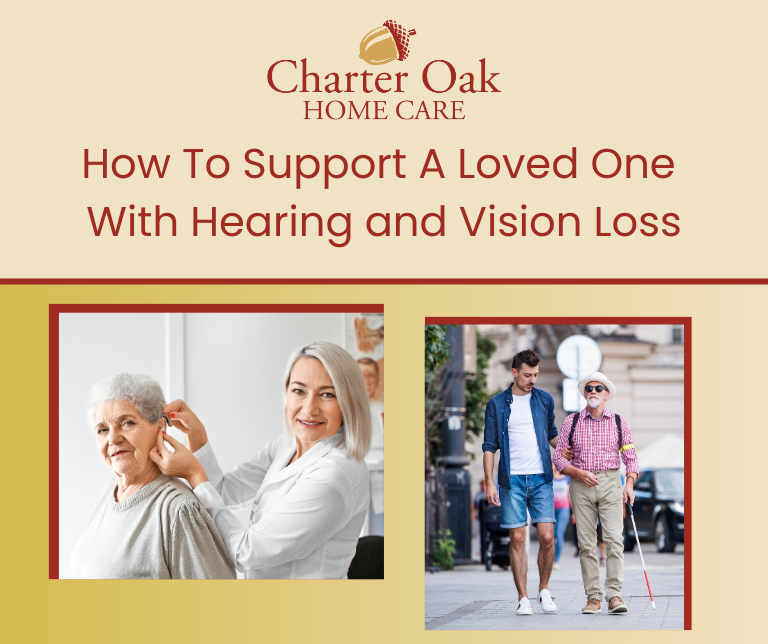
Navigating hearing and vision loss can be very difficult, which is why it’s important for family and friends to learn how to support their loved ones. Hearing and vision loss can seriously impact a loved ones day to day routine and supporting them can make all the difference. They may need an extra helping hand finding a new routine or completing certain tasks. The good news is there are plenty of ways to help your loved one.
Hearing Loss
Being successful in working with someone with hearing loss generally requires effort and doing things a way you never thought of before. Even when the person may be utilizing hearing aids or active listening strategies it is crucial that you use consistent communication strategies. Here are some suggestions when working with a loved one with hearing loss.
- Face the hearing-impaired person face on, and at the same level. Try to talk to them in a good light whenever possible. Make sure you position yourself so that the light is shining on the speakers’ face, not in the eyes of the listener.
- Do not talk to them from another room. Being unable to see each other when communicating is a common reason people have difficulty understanding what is being said.
- Say the person’s name before initiating a conversation. This gives them a chance to focus attention and reduce the chance of missing part of the conversation.
- Speak slowly and clearly but also try to make it feel natural. Try not to shout or exaggerate mouth movements. Shouting will distort the sound of speech and may make lip leading more difficult.
- Keep your hands away from your face while speaking. If you are eating, chewing, etc. your speech will be more difficult to understand. Be aware that beards and mustaches can also interfere with the ability of the hearing impaired to read your lips.
Vision Loss
Working with someone with vision impairment can seem challenging but with the right tools it won’t seem so difficult. It is important to ensure your loved one feels safe, and supported. Losing one’s vision can be frightening, being able to see clearly is something many take for granted. Learning ways to help your loved one cope with vision loss can greatly ease their fears. Here are some helpful tips for working with a loved one with vision loss.
- Effective communication is vital when caring for someone with vision loss. Always identify yourself before speaking, speak clearly and slowly. Use descriptive language and avoid using gestures that can’t be seen.
- Create a safe, and comfortable environment for your loved one with vision loss. Ensure the home is free of hazards such as rugs, clutter, and obstacles. Installing additional lighting or tactile markers may also be helpful. When furniture is put in one place, keep it there and try not to rearrange the furniture.
- Label items with large print or braille labels when possible. Using contrasting colors on items can help them appear more visible. Try to keep these items in the same place and as consistent as possible. Consistency is key for someone with vision impairment.
- Maintain a positive attitude to help your loved one cope with the challenges of vision loss. Staying optimistic is essential even when things are difficult. Focus on your loved ones strengths and abilities. Encourage self care, especially on the days where things are especially hard.
- The most important thing you can do is be patient. Patience and understanding is key when helping your loved one with vision loss. Acknowledge their feelings and concerns. Try your best to remain composed in challenging situations. Recognize and respect boundaries and you will be successful.
Whether your loved one has vision loss, hearing loss, or both, try to put yourself in their shoes and understand how they may be feeling. The best way to help your loved one is to be as supportive as possible and educate yourself on each situation. With the right tools you can help your loved one feel safe and comfortable with their daily routines.